WELCOME TO KINGHOME
Get A Free Quote
We will get back to you within 8 hours

WELCOME TO KINGHOME
We will get back to you within 8 hours
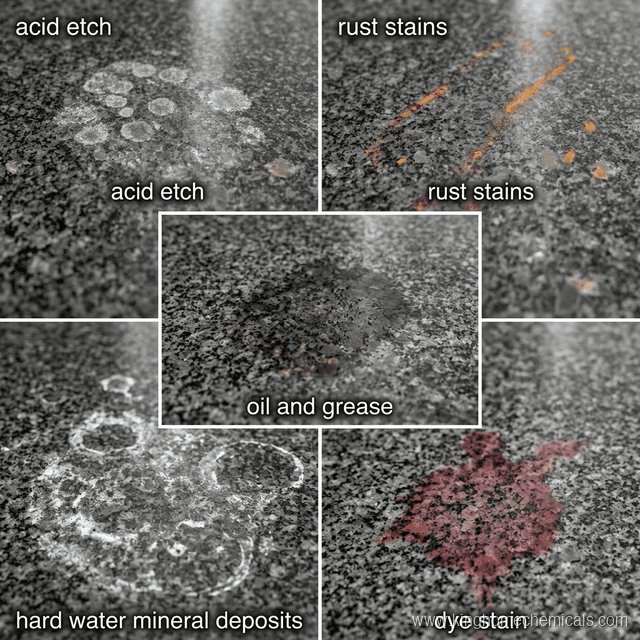
To remove chemical stains from granite, first identify the stain type: acid etch, acetone or solvent marks, oil-darkening, rust, dye, or hard-water residue. Do not use random acids or abrasive cleaners. Blot fresh spills, test the sealer, then use the correct poultice, neutral cleaner, rust remover, or professional polishing step for that stain type.
Chemical stains on granite are not just an aesthetic problem — they can penetrate deep into the stone’s pores and become permanent if treated incorrectly. The wrong cleaning product or technique can make the stain worse, etch the surface, or strip the existing seal.
This guide specifically addresses chemical stains — those caused by reactive chemical contact with granite’s mineral structure — as distinct from surface dirt, soap film, or general soiling. It identifies the five most common chemical stain types on granite and provides the exact removal method for each one, including when a professional poultice is required and when a surface treatment is enough.
If you are searching how to remove chemical stains from granite, start by separating a true granite stain from surface etching. A dark mark usually means liquid has entered pores or weak sealer zones; a pale or rough mark usually means acid contact has changed the finish. That difference decides whether a poultice, sealer repair, or professional granite stain removal is the safer path.
| Search question | Likely problem | Safer next step |
|---|---|---|
| Acetone granite or acetone on granite | Solvent has removed residue, softened sealer, or exposed an older mark | Rinse with a neutral cleaner, dry fully, then test whether the granite sealer still repels water. |
| Does acetone remove oil stains from granite? | Acetone may help carry an absorbent poultice, but wiping acetone alone often spreads oil or weakens sealer | Use a poultice made for oil stains from granite, cover it, let it draw the oil out, and repeat only after the stone dries. |
| Granite acid or granite acid wash | Acid stains from granite are usually etch marks, not removable dirt | Stop acidic cleaners; deep etching often needs refinishing or repolishing rather than stronger chemicals. |
| How to remove stains from granite | The cause may be oil, dye, rust, hard water, sealer failure, or acid etching | Identify the stain type before choosing cleaner strength, dwell time, and pad pressure. |
Avoid treating every granite stain with the same cleaner. Acetone can be useful in controlled poultice work, but acetone granite cleaning should not replace stain diagnosis. For dark oil marks, patient poultice cycles protect the surface better than scrubbing. For granite acid damage, more chemical strength can make the finish worse. For recurring stains, check whether the granite sealer has worn thin before repeating removal steps.
Related workflows: compare oil contamination on stone floors, cleaning granite floors without damaging the seal, and the granite stain advice failure checklist below before choosing a product or restoration step.
Granite is one of the hardest natural stones (6–7 on the Mohs scale), but it is not impervious to staining. Its crystalline structure contains microscopic pores and natural fissures that can absorb liquids — especially in areas where the sealer has worn thin.
Key facts:
– Polished granite has tighter pores and resists staining better than honed or flamed granite
– Light-colored granites (white, beige, cream) show stains more visibly and absorb them faster than dark granites
– A properly applied penetrating sealer typically provides a working window of approximately 15–30 minutes for liquid spills — though this varies significantly by sealer quality and stone porosity
– Chemical stains penetrate differently than organic stains — they often react with the minerals in the granite, making surface wiping ineffective
Understanding the stain type is essential because each type requires a different chemical approach for removal.
Before choosing a removal method, use the visual characteristics below to identify which stain type you are dealing with. Selecting the wrong chemical agent will not remove the stain and may introduce secondary damage.
| Visual Appearance | Location / Context | Likely Stain Type | Go to Section |
|---|---|---|---|
| Dull, lighter-colored spot or ring; surface feels slightly rough or recessed to the touch | Where acidic liquids contacted stone — kitchen countertop near citrus, bathroom near tile cleaners | Acid Etching | Type 1 |
| Orange, brown, or reddish-brown spots or streaks | Near metal fixtures, furniture legs, or appearing “from inside” the stone with no external source | Rust Stain | Type 2 |
| Dark, wet-looking patch that does not dry; appears to be beneath the surface | Kitchen areas near cooking zones, cosmetics, or petroleum products | Oil / Grease Stain | Type 3 |
| White, chalky, or cloudy film or rings | Around faucets, sinks, shower areas | Hard Water Deposit | Type 4 |
| Colored spots — purple/red, brown, yellow, blue-green | Where beverages, food dyes, ink, or fabric dye contacted the stone | Dye / Pigment Stain | Type 5 |
Quick test: Run your fingertip lightly across the affected area. If the surface texture has changed — feels slightly rough or depressed — you are likely dealing with acid etching (Type 1), which is surface damage rather than a stain. This distinction is critical: stain removers will not restore an etched surface, and applying them wastes time while the damage sets further.
What it looks like: Dull, lighter-colored spots or rings where the polished surface has been chemically dissolved. Not a surface stain — it is actual surface damage.
The critical distinction — etching vs. staining:
Many users mistake acid etching for a stain and apply cleaning products, which does nothing to restore the surface and may compound the damage. Here is how to distinguish between the two:
If you have confirmed this is etching, do not apply stain removers — they are not formulated to restore surface polish and will not address the damage.
Why it happens: Acids react with the feldspar and calcium-bearing minerals in granite, dissolving the polished surface layer. Even brief contact with citrus juice, vinegar, or acidic bathroom cleaners can etch polished granite.
Removal method:
Prevention: Always use pH-neutral cleaners on granite. Never use vinegar, bleach, or ammonia-based products.
What it looks like: Orange, brown, or reddish-brown spots or streaks. Often appears near granite edges, around metal fixtures, or seemingly “from within” the stone.
Why it happens: Granite naturally contains iron-bearing minerals (pyrite, biotite). When exposed to moisture, these minerals oxidize and produce rust that migrates to the surface. External sources include metal furniture legs, iron brackets, and steel wool residue.
Removal method:
Important: Never use generic rust removers (CLR, naval jelly) on granite — they contain hydrochloric acid that will etch and permanently damage the surface.
What it looks like: Dark, wet-looking patches that do not dry. The stain appears to be beneath the surface. Common in kitchen countertops near cooking areas.
Why it happens: Cooking oil, butter, grease, cosmetics, and petroleum products penetrate granite pores easily because oil has lower surface tension than water, allowing it to be absorbed faster and deeper.
Removal method:
What it looks like: White, chalky, or cloudy film or rings on the granite surface. Often appears around faucets, sinks, and shower areas.
Why it happens: Hard water contains dissolved calcium and magnesium. When water evaporates, these minerals are left behind as a solid deposit on the stone surface. Over time, deposits can bond chemically with the stone, making them extremely difficult to remove.
Removal method:
Never use vinegar or lemon juice to remove hard water spots from granite — the acid will create a bigger problem (etching) than the one you are solving.
What it looks like: Colored spots or patches — purple/red (wine), brown (coffee/tea), yellow (turmeric), blue/green (ink, dye). The stain may appear to be on the surface or absorbed into the stone.
Why it happens: Colored organic and synthetic compounds penetrate the pores of unsealed or poorly sealed granite, binding to the mineral structure.
Removal method:
Before using acetone, acid cleaner, rust remover, or a poultice on granite, identify what the mark actually is. The latest GSC queries show separate intent around how to remove chemical stains from granite, acetone granite, does acetone remove oil stains from granite, acid stains from granite, and general granite stain removal. Those searches need a safer decision path because an oil stain, rust mark, acid etch, hard-water deposit, and sealer haze can look similar in photos but need different chemistry.
| Search or site symptom | What to check first | Safer treatment path |
|---|---|---|
| Acetone on granite or acetone for oil stains | Check whether the mark is oil absorbed into pores or only surface residue. | Use absorbent testing and a controlled poultice first; for heavy oil contamination, review Grease Remover and the oil contamination guide. |
| Orange, brown, or metal-transfer rust marks | Confirm rust source and avoid random acidic cleaners on polished granite. | Use a granite-specific path such as Granite Rapid Rust Remover, then rinse and inspect the finish. |
| Acid on granite, acid wash granite, or dull etched patches | Separate a stain from an etch. Acid damage changes the surface, not only the color. | Do not keep adding stain remover. Move to professional repolishing or restoration if the shine is physically etched. |
| Cement, limescale, grime, or mineral deposits | Test a small area and confirm the surrounding stone finish can tolerate the cleaner. | Compare Stone Stain Remover and Efflorescence and Scale Cleaner based on the deposit type. |
| Stain removed but the area darkens again | Check sealer failure, moisture movement, and repeated oil exposure. | Clean residue, dry fully, then follow how to re-seal granite after stain removal. |
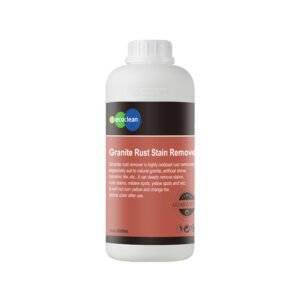
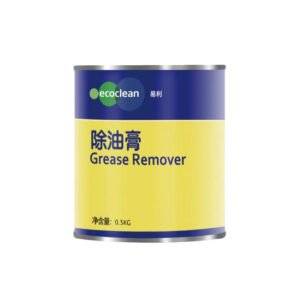
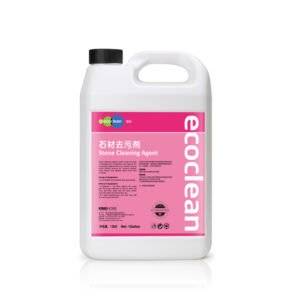
For follow-up decisions, use the granite stain advice failure checklist below when a household method made the mark worse, how to clean granite floors without damaging the seal for routine maintenance, and granite and terrazzo floor cleaning machines when the stain problem is part of a larger floor-care program.
Before consolidating the old failed-advice article, keep the diagnostic value that was unique to it: the page explains why common household advice can turn a granite stain into secondary damage. Use this checklist when a customer has already tried vinegar, bleach, abrasive powder, acetone, a generic rust remover, or the wrong poultice before asking for a professional stone-care path.
| Failed advice or symptom | What it may have caused | Safer next check |
|---|---|---|
| Vinegar, lemon juice, CLR, descaler, or acid cleaner | Acid etching, dull patches, or roughened polish rather than a removable stain. | Use raking light and fingertip texture checks before applying any more stain remover. |
| Bleach or repeated disinfecting cleaner | Invisible sealer degradation, future darkening, or light-color discoloration on some granite. | Run a water-drop test after the area is clean and dry, then decide whether resealing is needed. |
| Abrasive powder, rough pad, or steel wool used as a scrub | Abrasive scratch patterns, haze, or uneven reflectivity on polished granite. | Stop mechanical scrubbing and assess whether polishing, not cleaning chemistry, is required. |
| One poultice recipe used for every mark | Wrong chemistry can leave oil, rust, dye, or mineral residue untouched while spreading moisture. | Match poultice chemistry to the stain type and let each test area dry fully before repeating. |
| The stain improves but returns after drying | Weak sealer, moisture movement, remaining oil, or residue below the surface. | Confirm the source, dry time, and sealer condition before sealing over the area. |
This retained diagnostic layer supports the main chemical-stain guide without keeping a second competing URL live. After the destination is verified, the old failed-advice URL should be redirected one-to-one to this guide through a confirmed redirect route.
A poultice is the most effective deep-stain removal technique for granite. Here is the standard procedure:
Materials needed:
Steps:
Even when the technique is correct, poultice treatments often fall short. These are the four most common failure causes:
This is the most frequent mistake. The drawing mechanism requires the paste to dry completely — as moisture evaporates, it carries stain molecules upward into the paste. If you remove the poultice while it is still soft or cool to the touch, the extraction process stops mid-way. The stain may be partially redistributed within the stone rather than drawn out. When in doubt, leave it for an additional 12 hours before checking again.
Taping the plastic wrap edges is not optional. If the wrap is loose or the tape has gaps, the poultice dries within a few hours rather than the required 24–48 — losing its drawing power before the stain has time to migrate upward. Press the tape firmly along all four edges, including any overlap seams. The poultice should remain damp throughout the dwell period; if you check at the 12-hour mark and it has already fully hardened, the seal was insufficient.
Each chemical agent targets a specific stain chemistry. Acetone dissolves oil-based compounds and certain dyes — it does not affect mineral salt deposits. Hydrogen peroxide oxidizes organic pigments — it does not chelate iron oxide. Applying the wrong chemical to a stain will produce no result regardless of how long the poultice sits. Always identify the stain type using the table at the top of this guide before selecting your chemical agent.
If a previous poultice application left residue dried into the pores, the next application cannot make full contact with the stain. Between applications, clean the area thoroughly with pH-neutral cleaner, rinse with clean water, and allow to dry completely before applying a fresh poultice. Applying a second poultice over residue from the first is one of the most common reasons repeated treatments appear to have no cumulative effect.
Some granite stain situations require professional stone restoration rather than DIY treatment:
Professional restorers use industrial diamond polishing equipment, commercial-grade poultice systems, and application techniques that deliver results home methods cannot match. For more on professional stone care, see our granite floor cleaning guide.
Can you use bleach on granite?
No. Bleach (sodium hypochlorite) should not be used on granite. While it does not etch the surface the way acids do, bleach degrades penetrating sealers over time and leaves the stone progressively more vulnerable to staining. Repeated use can also discolor light-colored granite. For sanitizing granite surfaces, use a stone-safe neutral pH cleaner or a disinfectant specifically formulated for natural stone — check the product label to confirm it is safe for sealed granite.
Does acetone damage granite?
Acetone does not etch or permanently damage granite when used correctly as part of a poultice treatment. It is a solvent that dissolves oil-based compounds and certain dyes without reacting chemically with granite minerals. However, repeated acetone use will progressively strip penetrating sealers from the treated area, so reseal the surface after any acetone-based poultice treatment. One additional consideration: on very dark-colored granite, acetone can occasionally leave a slight lightening effect on the treated spot. Mineral spirits are a safer solvent choice for oil stain poultices on dark granite.
How do I know if my granite is sealed?
Use a water bead test: place a few drops of water on the granite surface and leave undisturbed for five minutes. If the water beads up and sits on the surface, the sealer is intact. If the drops absorb into the stone and darken the surface, the sealer has worn thin and resealing is needed. For kitchen countertops in active cooking areas, perform this test every six to twelve months — heat, cleaning products, and daily use accelerate sealer degradation in these zones.
How long before a granite stain becomes permanent?
There is no single answer, as the timeline depends on the stain type, the stone’s porosity, and whether the surface is sealed. As a general principle: the faster you act, the shallower the penetration. Oil stains on unsealed granite can penetrate deeply within the first thirty minutes. Acid etching is instantaneous — the surface damage occurs on contact. Dye stains from wine or coffee on sealed granite can often be treated effectively if addressed within a few hours, while the same stain left overnight becomes significantly harder to remove. Rust stains from internal minerals develop gradually over weeks or months and are the most difficult category to reverse with DIY methods at any stage.
Why do rust stains appear from inside granite with no external metal source nearby?
Granite is an igneous rock that naturally contains iron-bearing minerals — pyrite, biotite, and hornblende are among the most common. When moisture reaches these minerals (including from ambient humidity, cleaning water, or condensation beneath objects), they oxidize and the resulting rust migrates toward the surface. This is not a manufacturing defect or a quality issue with the stone — it is a natural characteristic of certain granite types. Darker granites and varieties with visible mineral flecks or veining are more prone to this. Treatment addresses the surface manifestation, but the underlying oxidation process may continue; applying and maintaining a quality penetrating sealer reduces moisture intrusion and slows the rate at which future oxidation reaches the surface.
 English
  Spanish